The Rose
The Rose is the Little Prince's cherished flower, the sole bloom on his tiny planet, and the being for whom he left his world and to whom he ultimately returns. She is defined by her fragility—she must be protected under a glass globe each night—and by her pride, which the Little Prince only fully understands after his travels. Her fate after the Little Prince's departure is never confirmed, and this uncertainty becomes the story's great, aching mystery: whether the sheep, for whom the Narrator drew a muzzle but forgot the leather strap, has eaten her. The Rose is thus not merely a character but the emotional and philosophical center of the book's meditation on love, responsibility, and the unknowable consequences of absence.
Identity and Background
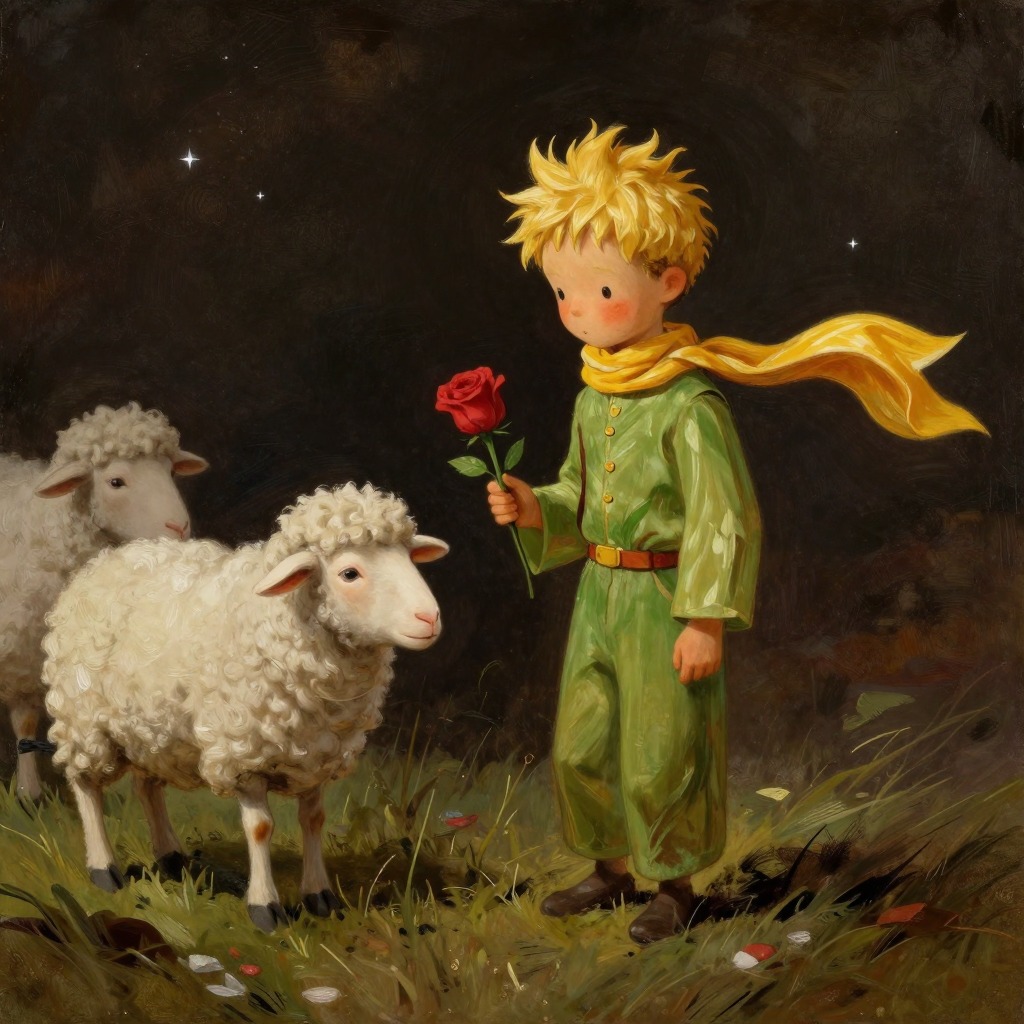
The Rose is introduced entirely through the Little Prince's memories and the Narrator's anxious speculations. She is a single flower on the little prince's planet, and she requires constant care: the Little Prince shuts her under her glass globe every night and watches over her very carefully. This nightly ritual establishes her as both precious and vulnerable, a being who cannot survive without the Little Prince's devoted attention. The Narrator, drawing the muzzle for the sheep that the Little Prince took with him, forgot to add the leather strap, meaning the sheep may never have been able to fasten it. This small oversight—a moment of absent-mindedness—unleashes the possibility that the sheep could have eaten the Rose, a possibility that haunts the entire narrative.
The Central Uncertainty
No evidence in the book confirms whether the Rose lives or has been eaten. The Narrator oscillates between two opposing visions. At one time he reassures himself: "Surely not! The little prince shuts his flower under her glass globe every night, and he watches over his sheep very carefully . . ." In this hopeful frame, the stars laugh with sweetness. But at another time he imagines the opposite: "On some one evening he forgot the glass globe, or the sheep got out, without making any noise, in the night . . ." Then the little bells of the stars are changed to tears. This unresolved binary—yes or no, eaten or safe—is presented as "a great mystery" that changes everything in the universe for those who love the Little Prince. The Narrator insists that no grown-up will ever understand that this is a matter of so much importance.
The Rose and the Landscape of Loss
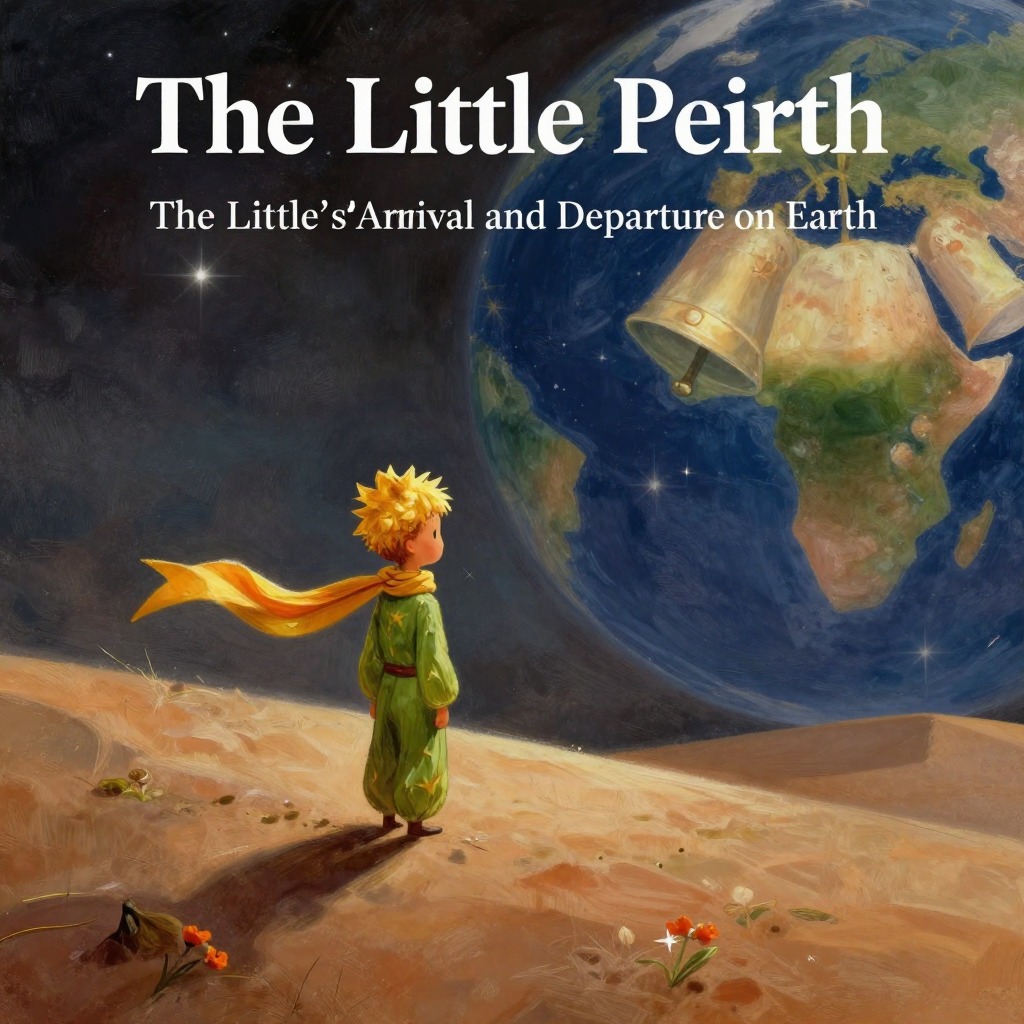
The Rose is also tied to the physical place where the Little Prince appeared on Earth and disappeared—the African desert. The Narrator calls this "the loveliest and saddest landscape in the world" and draws it twice to impress it on memory. The Rose is not present in this landscape, but her absence is what makes it sad: the Little Prince left Earth to return to her, and his body was not found at daybreak. The Narrator's plea to any future traveler who might encounter a golden-haired little man who refuses to answer questions is, ultimately, a plea for news of the Rose: "Send me word that he has come back." The Rose's fate is the story's final, unanswerable question, and the landscape where the Little Prince vanished becomes a shrine to that question.
Thematic Significance
The Rose embodies the paradox of love as both a source of profound meaning and of unbearable uncertainty. The Narrator's alternating hope and despair—the stars as bells or as tears—mirror the emotional logic of caring for someone who is far away and whose well-being can never be verified. The Rose is never seen acting; she is only remembered, protected, and worried over. Yet her fragility and the single forgotten strap make her the most consequential presence in the book's final pages. The question "Has the sheep eaten the flower?" is not answered, and the Narrator insists that it cannot be answered by grown-ups, only felt by those who look up at the sky and ask themselves. The Rose thus becomes a test of the reader's own capacity for love and for living with not-knowing.